what are analog channels ?
Understanding Analog Television Technology
Key Technical Differences: Analog vs. Digital IPTV

Why Analog Has Been Phased Out Across Europe
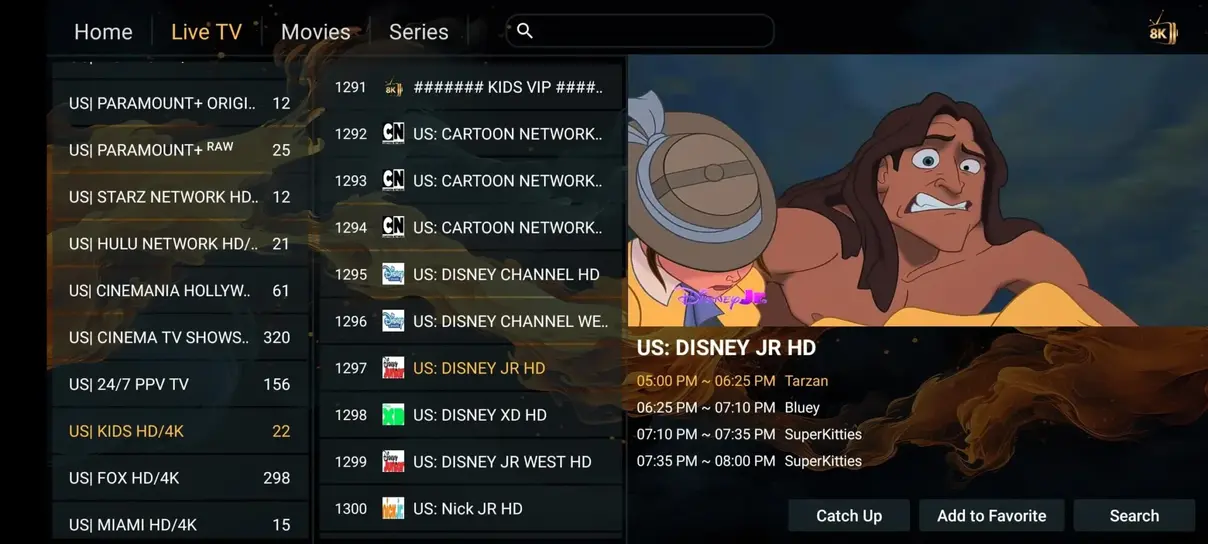
Transitioning from Legacy Cable to n1 iptv
The Technical Evolution: From Cathode Ray Tubes to 4K Digital Streaming
To fully grasp how analog television operated, one must examine the cathode-ray tube (CRT) displays of the 20th century. In analog systems, an electron gun scanned across phosphor lines on the screen at 50 or 60 fields per second. The analog radio frequency signal directly controlled the intensity of this electron beam. Any atmospheric interference or cable damage instantly manifested as visible static, ghosting, or buzzing hums in the audio.
With n1 iptv, streaming relies on mathematical algorithms and digital compression codecs like H.264 (MPEG-4 AVC) and H.265 (HEVC). Video frames are analyzed for redundant data across neighboring pixels, reducing bandwidth consumption while preserving pin-sharp detail, vibrant HDR contrast, and pristine 4K resolution.
Why Cable Providers Decommissioned Analog Signals
Coaxial cable networks have finite radio frequency bandwidth (typically up to 862 MHz or 1 GHz). In legacy networks, transmitting 30 analog channels consumed over 240 MHz of precious spectrum. By switching entirely to digital IP transmission, telecom operators freed up bandwidth to provide gigabit fiber internet to homes.
For consumers, this evolution marks a massive leap forward. Instead of paying €80 monthly for a handful of noisy analog channels, modern households subscribe to n1 iptv for just €59,00 annually, receiving over 35.000+ digital streams with electronic program guides, catch-up TV, and multi-language audio selection.
The Societal Impact of the Digital Television Revolution
The death of analog television wasn't merely a technical upgrade; it transformed how modern society consumes news, culture, and sports. Under the analog regime, national borders created strict media silos: if you lived in Munich or Amsterdam, accessing live Spanish football, British comedy, or American news required expensive satellite equipment with massive parabolic dishes on your roof.
Digital IPTV technology demolished those artificial borders. Today, a subscriber in Berlin or Dublin connects via n1 iptv to 35.000+ live global channels instantly over a single internet connection. Multi-language families, expats, and language learners enjoy their native broadcasts in stunning high definition with interactive electronic program guides.
As internet speeds continue to surge with fiber-to-the-home and 5G connectivity, digital IPTV represents the definitive future of global telecommunications.
The Complete Spectrum Transition: How Governments Reallocated Analog Frequencies
The worldwide decommissioning of analog broadcast signals was driven by high-stakes economics and spectrum scarcity. Analog television signals were notoriously wasteful, demanding huge continuous radio spectrum chunks (typically 6 MHz in the United States and 8 MHz across Western Europe) to deliver a single fuzzy standard-definition channel.
When European regulators initiated the Digital Switchover (DSO), they recovered the valuable 700 MHz and 800 MHz frequency bands—commonly termed the 'Digital Dividend'. These low-frequency bands propagate over vast geographical distances and penetrate concrete buildings effortlessly. Governments auctioned this reclaimed spectrum to telecommunications carriers for tens of billions of euros to deploy 4G LTE and 5G mobile networks.
Why IPTV Is the Ultimate Evolution Beyond Terrestrial Digital Broadcasting
Even modern terrestrial digital television (DVB-T2 / ATSC 3.0) remains bounded by finite local transmitter range and strict licensing restrictions. In contrast, n1 iptv operates across packet-switched IP networks, meaning channel count is not constrained by atmospheric frequencies. With 35.000+ live channels, 142.000+ on-demand movies, and 1.000+ 24/7 channels, IPTV delivers universal, borderless home entertainment without rooftops antennas, satellite dish realignment, or weather-induced signal degradation.
The Transition Timeline: How Major Countries Decommissioned Analog
The decommissioning of analog television unfolded in phased waves across the globe over a 15-year period. Understanding this historical progression highlights just how dramatically telecommunications technology has advanced in a single generation:
- Germany: Began its digital switchover early in 2003 with the Berlin-Brandenburg digital terrestrial project, culminating in full analog switch-off by 2009.
- Netherlands & Belgium: The Netherlands turned off terrestrial analog television in December 2006, while Flanders shut down analog broadcasts by late 2008.
- United Kingdom: Conducted a phased regional switchover between 2008 and 2012, concluding just before the 2012 London Olympic Games.
- United States: Transitioned nationwide from analog NTSC to digital ATSC on June 12, 2009.
Today, IPTV represents the next logical phase in television distribution. By liberating broadcasts from terrestrial antennas and regional satellites, n1 iptv delivers over 35.000+ live channels directly into your living room via high-speed IP networks.
Ready to Experience Ultra-HD 4K Streaming?
Join thousands of satisfied European households streaming with n1 iptv. Enjoy 35.000+ live channels, 142.000+ movies on demand, and 99.9% uptime with our 7-day money-back guarantee.